
This specific minting window utilized a metal alloy consisting of 90% Silver.
The market 1957 Half Dollar value depends entirely on the physical state of the metal surfaces.
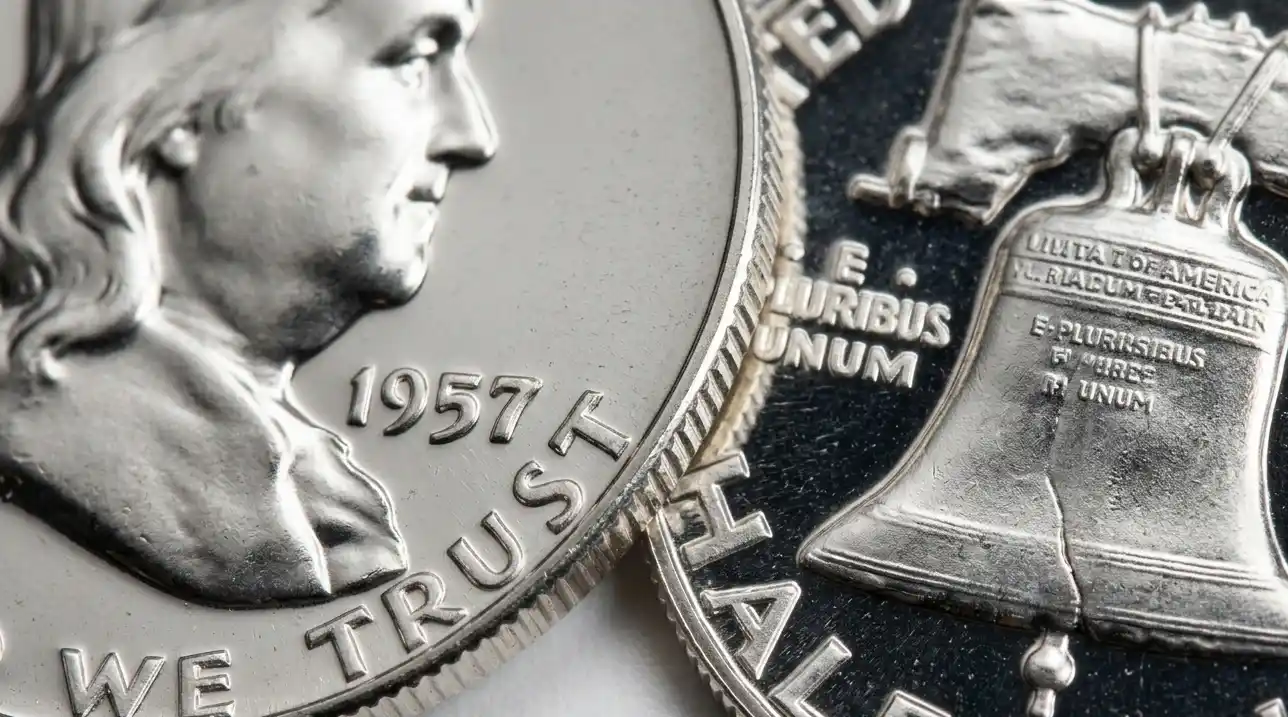
Absence of significant planchet defects makes field preservation the primary driver of pricing.
Adherence to weight and geometric specifications confirms the authenticity of the item.
Any deviations from the standards established by the mint indicate a counterfeit or extreme wear.
| Parameter | Value |
| Nominal | $0.50 |
| Year | 1957 |
| Metal | 90% Silver |
| Weight | 12.50 grams |
| Diameter | 30.60 mm |
| Mint Mark | Philadelphia (P), Denver (D) |
| Mintage (P) | 6,030,000 |
| Mintage (D) | 19,966,850 |
Utilizing precision scales allows for the exclusion of fakes during the initial inspection phase.
Hierarchy of Condition: From Wear to Perfection
Classification via the Sheldon scale separates coins into groups based on relief clarity.
Circulation wear begins at the highest points of the portrait and the liberty bell.
Primary Preservation Levels:
- Good 4: only outlines of the figures remain visible
- Fine 12: details in the hair strands can be observed
- Very Fine 20: lines on the shoulder area become distinct
- Extremely Fine 40: slight smoothing appears on high points
- About Uncirculated 50: partial mint luster remains intact
- Mint State 60+: complete absence of any circulation marks
Deep scratches found on the surface drop the grade by several numerical steps.
Value Dynamics 2021–2026
Investment potential for Silver coins shows high stability in the current decade.
Percentage growth in price correlates directly with the quality characteristics of the specimen.
Annual Price Changes for MS65: 2021 → $35 2022 → $38 (+8%) 2023 → $42 (+10%) 2024 → $47 (+12%) 2025 → $53 (+13%) 2026 → $60 (+13%)
Price Reduction Upon Grade Drop:
- Transition MS65 → MS63: loss of 45% in value
- Transition MS63 → AU58: loss of 60% in value
- Transition AU58 → F12: value pinned to Silver content
Sharp price declines occur because coins in lower quality exist in massive quantities.
Reverse Image Evaluation: Full Bell Lines
Special attention goes toward the strike quality of the Liberty Bell on the back.
Presence of complete horizontal lines near the bottom of the bell increases the coin status.
FBL Classification Criteria:
- Continuity of the upper pair of horizontal lines
- Sharpness of the lower pair of horizontal lines
- Absence of marks interrupting the relief lines
- Uniformity of the strike across the entire width
Price Comparison for 1957-D in 2026:
- MS65 (No FBL): $55
- MS65 (With FBL): $140
- Difference: 154%
Missing full lines reduces the liquidity of the coin among professional investors.
Cause and Effect of Surface Damage
Mechanical contact during the circulation process leaves permanent marks on the Silver.
Degradation of the surface follows a predictable sequential pattern.
Mechanics of Coin Decay: Contact with other coins → Appearance of small marks → Stripping of the protective patina layer → Darkening of the metal → Loss of original mint luster
Darkening processes accelerate when stored in high-humidity environments.
Using plastic holders prevents direct contact with air.
And don’t forget to regularly check the coin with the coin value app.
Record-Breaking Auction Performance
Public sales in 2025 recorded historical maximums for rare high grades.
Specimens in MS67+ condition appear rarely due to the rough handling of bags in 1957.
Auction Statistics:
- 1957-P MS67+ FBL: $18,500 (Heritage Auctions)
- 1957-D MS67+ FBL: $9,200 (Stack’s Bowers)
- 1957-P Proof-69: $5,400 (eBay Premier)
High pricing results from the low number of certificates issued by professional services.
Bright rainbow toning can add up to 25% to the final transaction amount.
Grading Mirror-Like Proof Issues
Special strike coins originated exclusively from the Philadelphia mint.
Technology involved polishing the dies to a mirror-like finish.
1957 Proof Evaluation Features:
- Cameo: contrast between the field and the relief
- Deep Cameo: maximum frosted effect on the image
- Brilliant: absence of contrast despite high luster
| Proof Type | Price in 2024 | Price in 2026 | Growth |
| PR67 | $80 | $95 | +18% |
| PR68 Cameo | $450 | $520 | +15% |
| PR69 DCAM | $4,800 | $5,600 | +16% |
Discovery of cleaning marks on a mirror field strips the coin of its collectible status.
Impact of Mint Location on Preservation
Equipment differences between Denver and Philadelphia affected die longevity.
Denver issues frequently display sharper details but higher mark counts.
Regional Comparative Analysis:
- Philadelphia (P): softer strike quality, fewer FBL lines
- Denver (D): harder strike, frequent field damage
Survival statistics for high-grade coins remain higher for the Denver output.
Careful stacking in western storage facilities explains this difference.
Risk Factors for Buyers in 2026
The market contains many coins subjected to chemical cleaning.
Acidic removal of the patina creates an unnatural shine recognizable by experts.
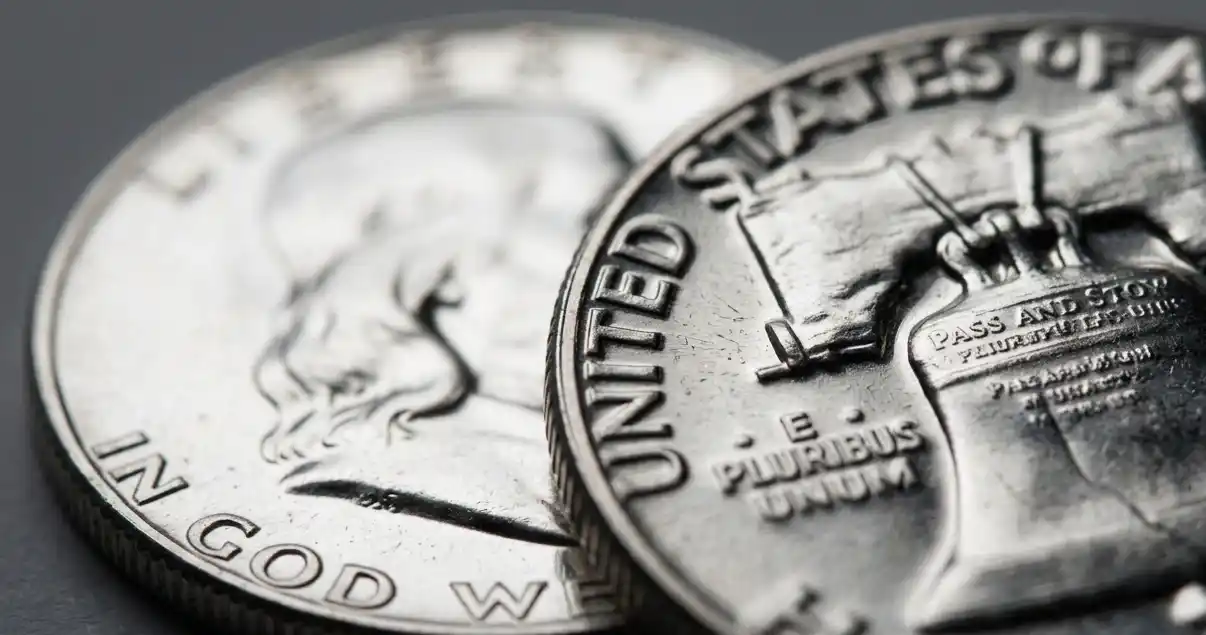
Evidence of Tampering:
- Absence of radial flow lines from the strike
- Dark buildup around the lettering
- Unnaturally white metal color
- Microscopic pitting on smooth areas
Restoring the surface through mechanical means counts as damaging the item.
Such specimens receive a Details note during the certification process.
Technical Description of Relief Details
Accurate grading requires inspecting specific zones of the portrait.
Silver is a soft material prone to rapid deformation.
Critical Control Points:
- Benjamin Franklin’s ear: first area to lose detail
- Shoulder seam of the clothing: indicator for AU status
- Liberty text: location for concentrated small scratches
- Bell clapper: verification of strike depth
Retaining sharp edges on the letters proves the use of an early die state.
Correlation Between Price and Physical Wear
Chart of value loss as the coin enters trade circulation.
Every month of active use reduces the value by a specific percentage.
Stages of Value Degradation: New Coin (100%) → One Month in Trade (90%) → Six Months in Trade (50%) → One Year in Trade (Silver Scrap Price)
Rare varieties with minting errors remain an exception to this rule.
Standard 1957 coins follow this progression without variation.
Confirmed Minting Errors
Presence of a mistake can compensate for poor coin preservation.
Several types of production anomalies were recorded in 1957.
Registry of Defects:
- Doubled Die Reverse (DDR)
- Weak strike on parts of the legend
- Planchet off-center displacement
- Die cracks creating raised lines
Value for error coins in 2026 starts at $100 for simple types.
Complex cases of doubled strikes reach $500 or higher.
Final Liquidity Table
Determining the sale speed based on the coin condition.
High liquidity characterizes specimens with professional coin identifier app certification.
| Grade | Sale Time | Demand |
| MS66 FBL | 1-3 days | Very high |
| MS64 | 1-2 weeks | Moderate |
| AU50 | 1 month | Low |
| G4 (Scrap) | Instant | Silver price |
Investors prefer placing capital into the top segment of the table.
Low-grade coins serve mainly for speculation on Silver prices.